Petrified wood in the Haut-Rhin: a behind-the-scenes look at artisanal craftsmanship
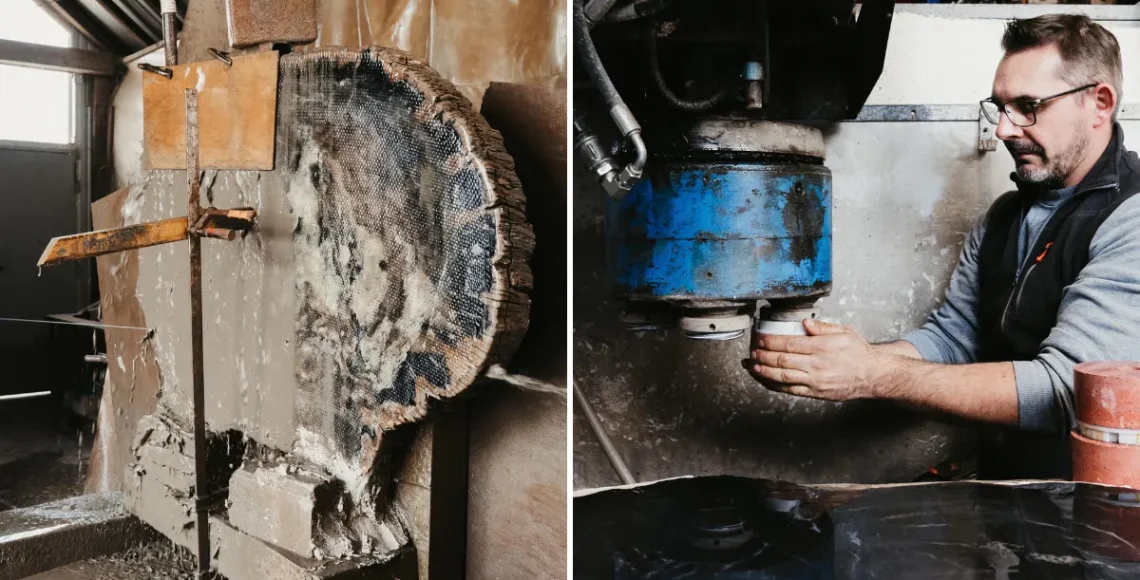
In the Goldstein Créations workshop in Spechbach-le-Bas, in the Haut-Rhin, each piece crafted from petrified wood requires days of work, from studying the log to the final polish. Wondering why a one-of-a-kind piece takes so long? Because the material, harder than granite, dictates its own pace. Here’s a behind-the-scenes look at this artisanal process, step by step, with one stage that’s more critical than all the others.
Key points
- Creating a finished piece takes several days of work: 6 to 8 hours of sawing, followed by 3 to 7 days of polishing, depending on the piece’s dimensions.
- Handling the log, both before and after sawing, is the most critical stage: a block that is poorly positioned or secured can ruin the piece.
- The restructuring process involves assembling pieces with matching grain and colors: this painstaking process makes each piece unique.
- Every fossilized wood creation is crafted in Spechbach-le-Bas, in the Haut-Rhin region, from logs selected in Arizona since 1993.
How do you choose a piece of petrified wood before shaping it?
Each piece of petrified wood is examined for its grain, colors, and structure before a single cut is made. This assessment of the material determines everything else: the direction of the cut, the slices to be taken, and the piece’s future use.
The logs fell naturally about 225 million years ago, during the Late Triassic period. Your Sundgau artisan personally selects them from private lands near Petrified Forest National Park in Arizona before they arrive in the Haut-Rhin region. To understand this extraordinary material, you can read more about the formation of petrified wood or follow the journey of a creation, from Arizona to Spechbach-le-Bas.
What are the steps involved in creating a piece of furniture from fossilized wood?
Three main stages follow one another in the workshop: sawing, reshaping, and then polishing. Each proceeds at its own pace, dictated by the material:
| Stage | Time taken in the workshop | Why it takes so long |
|---|---|---|
| Examining the log | Varies depending on the piece | Analyzing the grain, colors, and structure before deciding on the cut |
| Positioning and securing | Meticulous preparation | Improper securing during sawing can be disastrous for the piece |
| Sawing | 6 to 8 hours depending on dimensions | The material is harder than granite; the blade advances slowly |
| Restructuring | Several sessions of experimentation and adjustment | Finding pieces whose grain and colors match |
| Polishing | 3 to 7 days, depending on the dimensions | Bringing out the stone’s subtle shades requires successive passes |
Why is sawing petrified wood the most delicate step?
Handling the log, both before and after sawing, involves the greatest risks: a failure to properly wedge or secure it can ruin the piece. Months of selection and preparation are then put on the line in just a few movements.
The sawing itself takes 6 to 8 hours, depending on the piece’s dimensions. The blade cuts through a mineral material that has become harder than granite, and each slice reveals a pattern that no one, not even the artisan, knows in advance. This decisive step takes place in the petrified wood furniture workshop near Altkirch.
Advice from Audrey Gutfreund, gallery manager
“The moment we monitor most closely is the handling of the log, both before and after sawing. A block that’s poorly positioned or secured, and the piece could be ruined. Since 1993, this craft has taught us one thing above all else: patience. Our equipment sets its own pace, and that’s just fine. Fossilized wood has to be earned.”
What is the restructuring of a piece of fossilized wood?
Restructuring involves assembling pieces with matching grain patterns and colors to recreate a harmonious surface. It is the most unobtrusive step in the craft, and one of the most time-consuming.
Finding the right pieces takes time: the hues must complement each other, and the lines must flow seamlessly from one fragment to the next. This painstaking assembly process is why no two pieces are alike. It also paves the way for creating custom-made fossilized wood furniture, designed specifically for your interior and dimensions.
How long does it take to polish petrified wood?
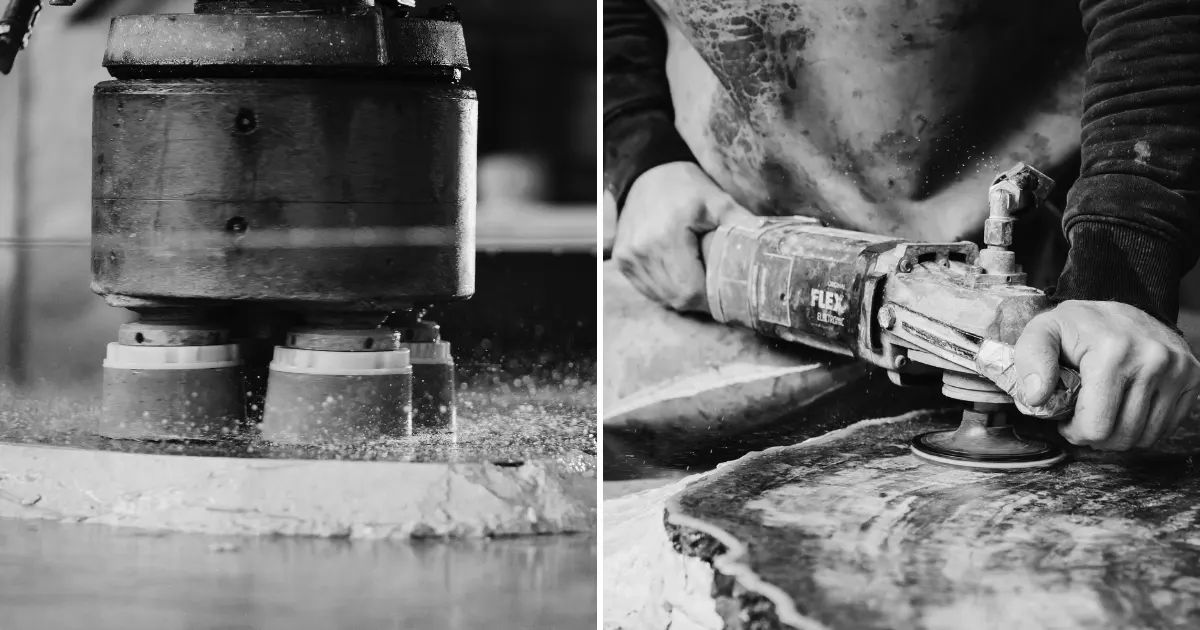
Polishing a piece takes between 3 and 7 days, depending on its size. Pass after pass, the surface gains depth and the stone’s nuances emerge.
This slow process is the price of brilliance: the material’s hardness leaves no room for haste. The result is evident in the fossilized wood creations on display in the gallery: coffee tables, sinks, and decorative pieces. Visitors immediately notice this meticulous attention to detail:
“We met them at the Paris fair, an incredible welcome… and even more incredible pieces (with a polish quality surpassing anything I’ve ever seen before). Enough to amaze collectors…” (translated from French)
Damien Corpet, see the review on Google
Where can you find crafted petrified wood in France?
The pieces crafted in Spechbach-le-Bas, in the Haut-Rhin department, are on display in the gallery and shipped throughout France. You can view the pieces at the Sundgau workshop-gallery or at the L’Écho du Temps boutique, in the heart of Mulhouse’s historic center.
Seeing the material in person is still the best way to appreciate what all that hard work brings to it: the depth of its hues, the feel of the polished stone, and the piece’s presence in a space. Your fossilized wood specialist in the Haut-Rhin will then guide you from selecting your piece to delivery.
Frequently Asked Questions About Fossilized Wood Creations
Why does fossilized wood take longer to work with than granite?
It is harder than granite. Fossilized wood is crystallized silica, with a hardness of about 7 on the Mohs scale, while granite ranges from 6 to 7. Each cutting and finishing step therefore takes longer than with commonly worked stones. It is this mineral density that accounts for the 6 to 8 hours of sawing and the 3 to 7 days of polishing required in the workshop.
Is it possible to speed up the production of a piece of petrified wood furniture?
The artisanal pace cannot be rushed. The workshop’s equipment dictates its own tempo, and forcing the pace would put the piece at risk, particularly during handling. Patience has been part of the craft since 1993: petrified wood must be earned.
How should I care for a fossilized wood piece on a daily basis?
Simple care is all that’s needed. The mineral material is extremely durable and suitable for daily use, whether it’s a coffee table or a sink. The workshop will advise you on the proper care procedures when your piece is delivered.
Do you ship your creations anywhere in France?
Every creation is shipped anywhere in France. Support continues after your purchase, from packaging the piece to its installation, with follow-up provided directly by the Haut-Rhin workshop.
How do I start a custom furniture project with your artisan in the Haut-Rhin?
A phone call or a visit to the gallery is all it takes to get started. Call 03 89 07 06 82 or stop by the L’Écho du Temps boutique at 3 rue des Bouchers in Mulhouse with your measurements and a few photos of your interior: we’ll then work with you to bring your project to life.
Behind every table, every basin, and every polished slab lie days of patience and craftsmanship honed since 1993. To discover a specific piece or design your own, contact Goldstein Créations: the workshop will respond to your inquiry and welcome you in the Haut-Rhin.
Goldstein Créations has been creating furniture and decorative pieces in Arizona petrified wood since 1993, in its workshop in Spechbach-le-Bas, in the Haut-Rhin, about twenty kilometres from Mulhouse. The family business selects its logs directly in Arizona and presents its creations at the workshop-gallery in the Sundgau and at the L’Écho du Temps boutique, in central Mulhouse. Address, opening hours and directions on the contact page.
Goldstein Créations
Workshop and gallery: 34 rue d’Illfurth, 68720 Spechbach-le-Bas, France
L’Écho du Temps boutique: 3 rue des Bouchers, 68100 Mulhouse, France
Phone: 03 89 07 06 82
Contact: contact form